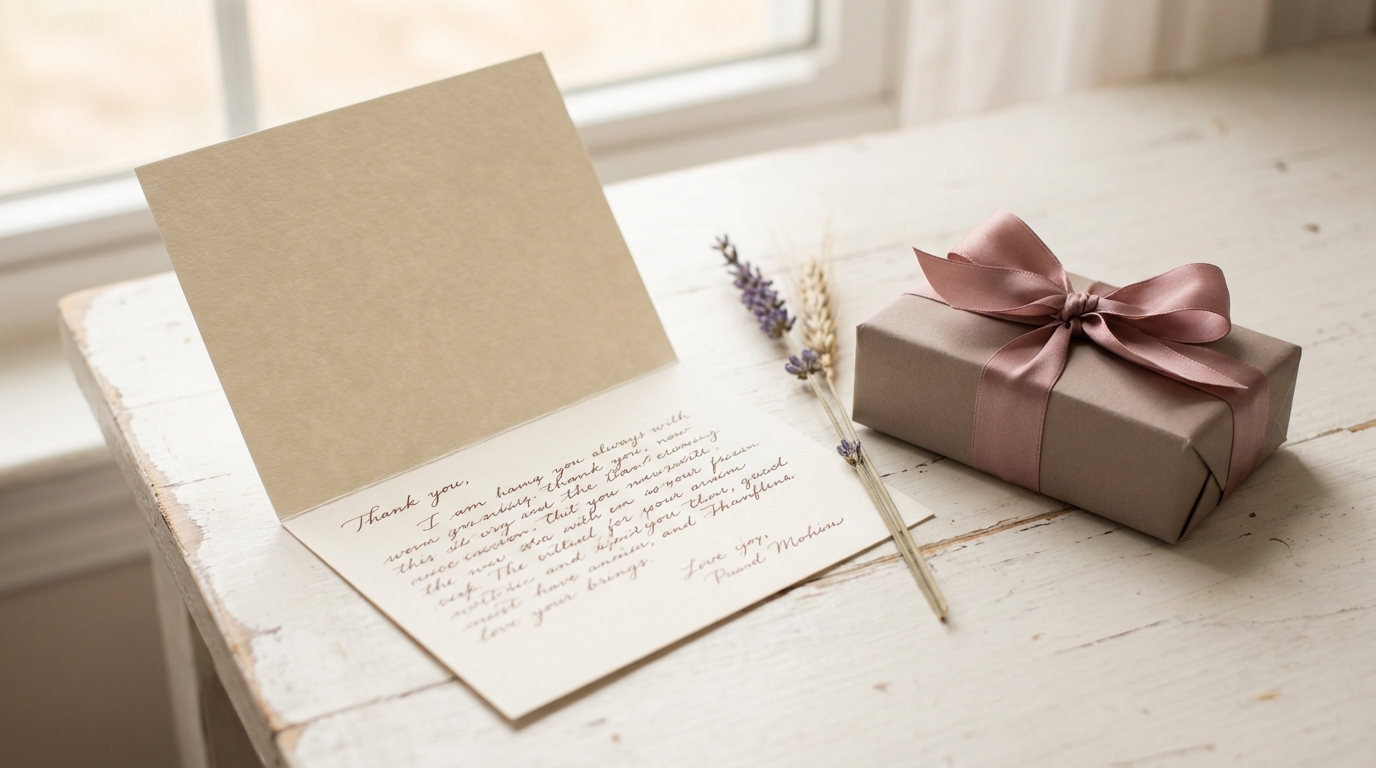
A proper thank you card is becoming rarer, which is exactly why sending one makes such an impact. Whether someone gave you a gift, hosted you for dinner, or helped you through a tough time, putting your gratitude in writing shows real thoughtfulness.
The messages below cover the most common reasons for sending a thank you card. Pick one, make it your own, and send it promptly - a thank you that arrives quickly always lands better.
Thank you so much for your generous gift. It was incredibly kind of you, and I truly appreciate your thoughtfulness.
Just a quick note to say a massive thank you! You really did not have to, but I am so glad you did.
Your kindness and generosity mean the world to me. I am so grateful to have someone like you in my life. Thank you, from the bottom of my heart.
Thank you for the gift! You clearly know me well - or you got very lucky. Either way, I love it!
I wanted to properly thank you for everything you have done. You went above and beyond, and I will not forget it.
Thank you for your kindness and support. It made more of a difference than you will ever know.
For a Gift
A thank you card for a gift should mention what the gift was and why you appreciate it. Being specific shows you genuinely valued their thought and effort.
Thank you so much for the [gift]. It is absolutely lovely, and I have already [used it / found the perfect spot for it / worn it]. You really did not have to, but I am so grateful you did.
What a generous and thoughtful gift. Thank you for the [gift] - it was such a kind surprise, and it will be well used and well loved.
I absolutely love the [gift]! You know me so well. Thank you for thinking of me and for being so generous. It truly made my day.
Thank you for the wonderful [gift]. Every time I [use it / see it / wear it], I will think of you and smile. What a lovely thing to do.
As an Amazon Associate, we may earn from qualifying purchases. This does not affect the price you pay.
For Hospitality
If someone hosted you for a meal, a weekend, or a holiday, a thank you card is the gold standard of good manners. Mention something specific you enjoyed.
Thank you so much for having us. We had the most wonderful time, and your hospitality was second to none. The [specific detail - the food, the walks, the company] was a real highlight.
What a brilliant weekend! Thank you for being such amazing hosts. We felt so welcome and had an absolute blast. We owe you a visit in return.
Thank you for your generous hospitality. We thoroughly enjoyed our stay and were so well looked after. It was a real treat from start to finish.
Thank you for the lovely dinner. The food was incredible, the wine was flowing, and the company was even better. We would love to return the favour soon.
For Help or Support
When someone has gone out of their way to help you - practically or emotionally - a thank you card acknowledges that effort properly.
I do not know what I would have done without you. Thank you for being there when I needed it most. Your support meant everything.
Thank you for all your help with [specific thing]. You went above and beyond, and I am so grateful. You are one of the good ones.
I wanted to say a proper thank you for everything you did for me during [situation]. Your kindness and generosity made a difficult time so much more bearable.
Thank you for your help and support. It is not always easy to ask, and I am grateful that you made it so easy to accept. I truly appreciate everything you have done.
Writing Tips
Send it promptly
A thank you card should be sent within a week or two. The sooner it arrives, the more impact it has. After a month, it starts to feel like an afterthought.
Be specific
Mention what you are thanking them for. "Thank you for the lovely vase" is far better than just "thank you for the gift".
Handwrite it
A handwritten thank you card is always more meaningful than a text or email. Even messy handwriting shows effort and sincerity.
Keep it genuine
You do not need to gush. A brief, sincere message that sounds like you is always better than something flowery that does not.
What Not to Write
"Thanks for the gift" (without saying what it was)
"You really shouldn't have" (it sounds like you wish they hadn't)
"Sorry this is late" as the opening line
"I'll have to find a use for it"
"It's the thought that counts" (implies you did not like it)
As an Amazon Associate, we may earn from qualifying purchases. This does not affect the price you pay.
Frequently Asked Questions
When should you send a thank you card?
Within a week or two of receiving the gift, attending the event, or receiving the help. For wedding gifts, you have a bit more time - up to three months is generally acceptable.
Do you need to send a thank you card for every gift?
If someone has taken the time and money to choose and send you a gift, yes - a brief thank you card is the right thing to do. It does not need to be long, just sincere.
Is a thank you text acceptable instead of a card?
A text is fine as an immediate response, but for more significant gifts or gestures, follow up with a handwritten card. It shows a level of effort and thought that a text cannot match.
What if you did not like the gift?
Thank them for their thoughtfulness and generosity without being dishonest. You do not need to say you loved it - you can focus on how kind it was of them to think of you.
Should children send thank you cards?
Yes - it is a lovely habit to instil early. For young children, a picture they have drawn with a simple message is perfect. For older children, a handwritten card teaches good manners and gratitude.